 English
 français
 Deutsch
 Español
 italiano
 русский
 português
 tiếng việt
 Türkçe
 Polska
 Indonesia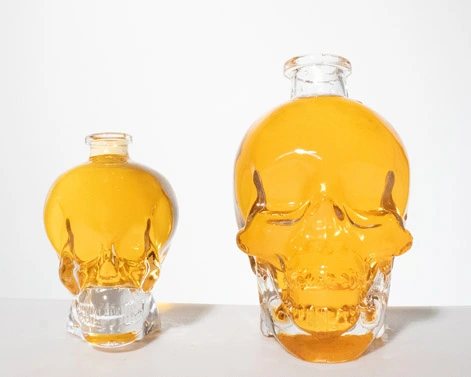



E-mail:
info@rsgbottle.com
EN

Spray painting is a technique that uses a spray gun to evenly apply paint onto the bottle surface. It can achieve gradient colors, multi-layer effects, and fine textures, making it especially suitable for designs that require large-area coverage or a three-dimensional feel.
Key Features:
· Visually rich effects: gradients, matte, glossy finishes
· Well-suited for bottles with complex curves
· Strong color depth and a noticeable texture
.webp "tequila_bottle_(2).webp")
Silkscreen printing uses a mesh stencil to transfer ink directly onto the bottle surface. It works best for clear lines, high-contrast colors, and is often used for logos, text, or simple icons.
.webp "spirit_bottle__(4).webp")
· Sharp edges and vibrant colors
· High wear resistance, less prone to peeling
· Ideal for single-color or limited-color designs
· Higher initial setup and color-matching costs
· Better for medium to large areas; priced by the number of color layers
· Unit cost is relatively high for small batches, but decreases with large-scale production
· Lower setup costs, especially for one or two colors
· Charged by the number of colors used
· Cost-effective for large orders, with faster production speeds
· In general, silkscreen printing is more cost-effective for simple, high-volume designs. If your design uses color gradients or special textures, spray painting may have a higher initial cost but can enhance product value.
· Good adhesion, but thick coats may chip upon impact or scraping
· Weather-resistant, suitable for long-term storage
· Surface texture can be affected by cleaning methods
· Ink bonds well with the surface, generally more wear-resistant than spray paint
· Suitable for bottles handled frequently; patterns are less likely to wear off
· Good resistance to alcohol and moisture, with minimal fading
· For bottles that are often shipped or handled, silkscreen printing tends to be more durable. For bottles meant mainly for display, spray painting is often durable enough.
1. Design Complexity
o Choose spray painting for gradients, shadows, or multi-color blends
o Choose silkscreen for solid colors, clear lines, or simple shapes
2. Budget & Order Quantity
o Large volume, cost-sensitive → lean toward silkscreen
o Small batch, premium product → consider spray painting
3. Bottle Shape & Material
o Complex curves, irregular shapes → spray painting adapts better
o Flat or gently curved surfaces → silkscreen offers precise results
4. Usage Scenario
o Frequently handled or shipped bottles → silkscreen is more scratch-resistant
o Gift or display-oriented products → spray painting offers stronger visual appeal
Both spray painting and silkscreen printing are reliable and mature bottle decoration methods. There is no “better” option in absolute terms—only what’s more suitable for your needs. Spray painting excels in delivering rich colors and texture, making it ideal for premium branding. Silkscreen printing is durable, sharp, and cost-effective, often the go-to choice for logos and text.
We recommend testing both methods on your actual bottle samples before making a final decision. Consider your budget, order quantity, and brand positioning. For specific questions, consult RSG Glass for tailored advice.